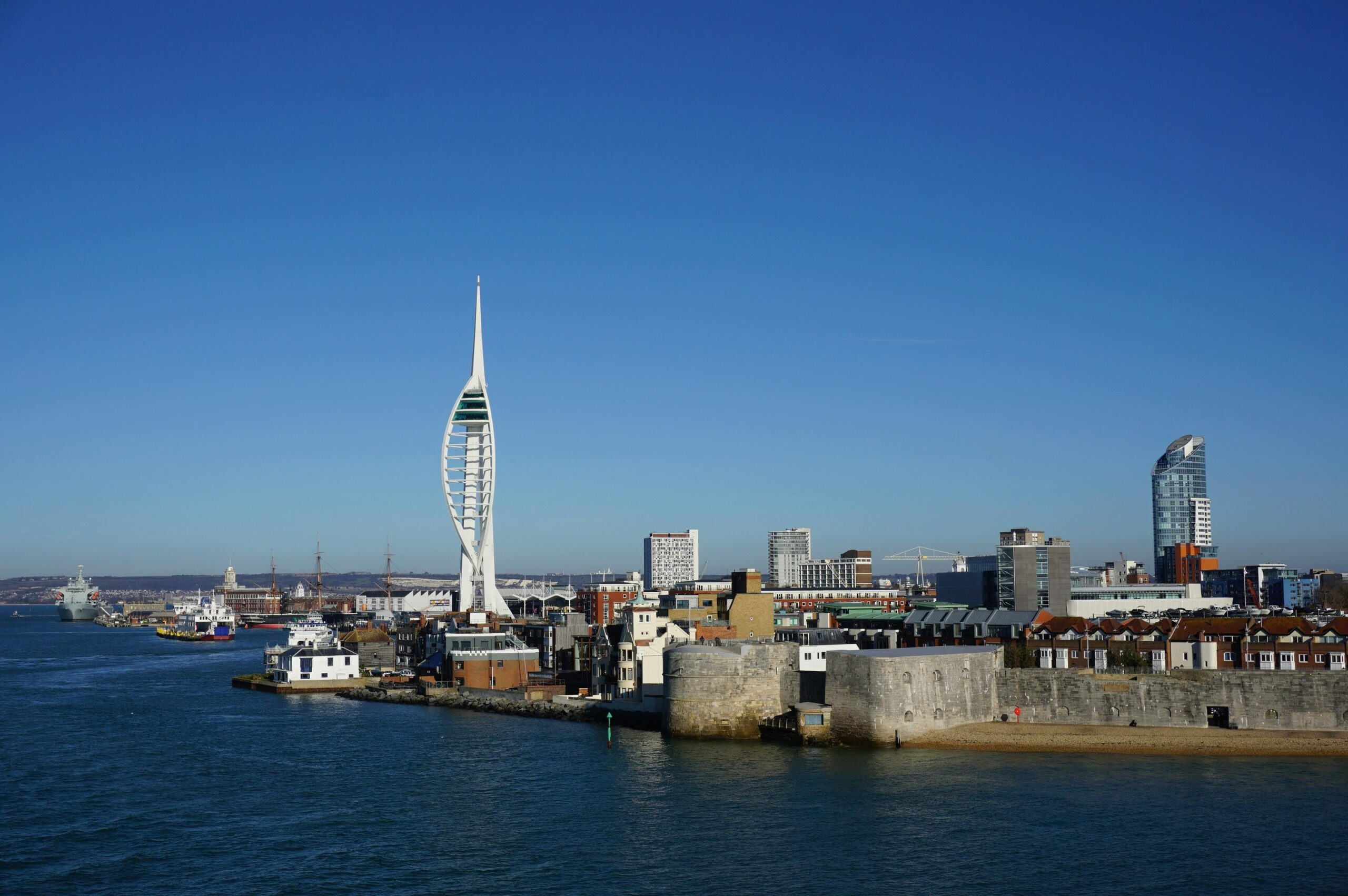
When UK property investors talk about the best places to buy, Portsmouth rarely comes up in the same breath as Manchester, Birmingham, or Leeds. It should be.
Portsmouth sits on the South Coast with a growing population, a resilient economy, and property prices that still offer genuine value compared to other cities in the South East. For investors looking at 2026, it is one of the most overlooked markets in the country.
Here is why.
The numbers that matter
Portsmouth is a compact city with big fundamentals.
- Population: approximately 210,000, with a high density that drives rental demand
- Average house price: around GBP 280,000 (significantly below the South East average of GBP 430,000)
- Rental yields: 5% to 7% depending on property type, with HMOs regularly achieving higher
- Student population: over 25,000 at the University of Portsmouth alone
- Two major hospitals: Queen Alexandra and St Mary’s, driving professional tenant demand

Compare that to Brighton, where the average house price is over GBP 500,000 and yields sit closer to 3.5%. Portsmouth offers a better entry point for investors who want South Coast exposure without the premium price tag.pidatat non proident, sunt in culpa qui officia deserunt mollit anim id est laborum.


Why Portsmouth works for property investors in 2026
1. Affordability gap with the rest of the South East
The South East is one of the most expensive regions in the UK, but Portsmouth has not yet caught up with its neighbours. You can buy a three-bedroom terrace in a good rental area for well under GBP 300,000. The same money in Winchester, Chichester, or Brighton buys significantly less.
This affordability gap means two things for investors: lower entry costs and room for capital growth as the city continues to develop.
2. Strong and diverse tenant demand
Portsmouth does not rely on one industry. Its economy is built on:
- Defence and naval operations (HMNB Portsmouth is a major employer)
- Higher education (University of Portsmouth continues to grow)
- Technology and innovation (the city has a growing digital sector)
- Tourism and hospitality (Gunwharf Quays, Historic Dockyard, ferry links to France and the Isle of Wight)
This diversity means that even when one sector slows, others keep the rental market moving. A landlord in Portsmouth is not dependent on students alone, or on one employer.
3. Infrastructure investment that matters
Several projects are shaping Portsmouth’s future:
- Portsmouth International Port expansion, increasing ferry and cruise capacity
- City Centre South regeneration, a long-term project bringing new homes, retail, and public space
- Continued investment in the University campus, attracting more students and staff
- Improved rail links to London Waterloo (under 90 minutes) and direct services to Brighton, Cardiff, and Southampton
These developments support both rental demand and long-term capital appreciation.
4. HMO viability
Portsmouth has some of the most attractive HMO yields on the South Coast. A standard three or four-bedroom Victorian terrace in areas like Southsea or Fratton can be converted into a profitable HMO for between GBP 250,000 and GBP 350,000.
Coupled with strong student and professional tenant demand, HMOs in Portsmouth regularly deliver gross yields of 8% to 12% when sourced and managed correctly.
At Xelox Properties, we source HMO opportunities across Portsmouth regularly. The city’s housing stock, tenant profile, and council licensing approach make it a strong market for this strategy.
5. Below market value opportunities still exist
Unlike central London or Brighton, where finding a genuine BMV deal is increasingly difficult, Portsmouth still has motivated sellers and realistic vendors. Divorce, probate, and landlords exiting the market create regular opportunities for investors who know where to look.
The key is having someone on the ground. A sourcing agent who knows Portsmouth’s micro-markets can find deals that never appear on Rightmove.
Areas within Portsmouth worth watching
Portsmouth is a city of distinct neighbourhoods, each with a different investment profile.
- Southsea: The most popular area for professionals and students. Higher prices but strong rental demand. Good for HMOs and premium single lets.
- Fratton and Milton: More affordable entry points with solid rental yields. Popular with families and hospital workers.
- North End and Copnor: Mid-range prices, good family rental demand. Suitable for standard buy-to-let.
- Portchester and Cosham: More suburban, lower density. Better for traditional letting to families and commuters.
- Old Portsmouth and Gunwharf: Premium market. Limited stock but high capital values. Best for investors with larger budgets.
What to watch out for
Portsmouth is a strong market, but no city is perfect. Be aware of:
- Flood risk: Parts of Portsmouth are in flood zones. Check flood risk assessments before buying.
- Parking: Many terraced streets have limited parking, which matters to some tenants.
- HMO licensing: The city operates additional HMO licensing schemes. Always check current requirements before buying.
- Seasonal student voids: Student-heavy areas see turnover in June and September. Budget for it.
Final thought
Portsmouth does not have the hype of Manchester or the prestige of Brighton. What it has is solid fundamentals: affordable entry prices, strong tenant demand, diverse employment, and genuine BMV opportunities.
For investors who want South Coast exposure without paying the premium, Portsmouth is one of the most underrated property investment locations in 2026.
Xelox Properties sources and analyses deals across Portsmouth, Hampshire, and the Isle of Wight. If you are looking for your next opportunity, let us know.
Contact Xelox Properties today to start the conversation.